 Leave a comment and win one of Christine Ashworth’s ebooks! No, really, leave a comment, get an ebook, that’s my motto! See below for more details!
So here is my first, but not my last, Christine Ashworth story. When I got my very first contract to be published from Crescent Moon Press, way back in June of 2011, wow, I was such a babe back then. And I was also very good-looking. Anyway, I wanted to talk to another author at CMP to make sure I wasn’t signing away my soul. I emailed three authors. Christine got back to me. She was great. A true author. But she had secrets. Oh yes, little did I know the depth of her enigmatic, mysterious, secrets until she agreed to an interview. And then, the closet full of skeletons opened. I was shocked!
But first! A little about her series and a little about her latest release!
DEMON SOUL: Book 1 in the Caine Brothers Series
Gabriel Caine stands on the edge of the abyss. A vampire has stolen his soul and if he doesn’t get it back soon, his next step will be into Hell. Only the naïvely mysterious Rose can help him retrieve it. Without her, he really will become the devil himself. Rose Walters has been sent back from the dead to complete one task-save Gabriel Caine. She’s drawn to Gabriel on the most basic level, but restoring his soul may cost Rose her life. Rose has touched the whole of Gabriel, making him yearn for a love he believes he can never have. Her willingness to put her human life on the line for him forces him to bring all three parts of himself-demon, human, and Fae bloodlines, and the strengths of each-into harmony and into the fight that decides their fate.
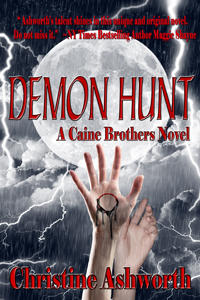 DEMON HUNT: Book 2 in the Caine Brothers Series
Tribred Gregor Caine decided long ago to deny his blood legacy, so he isn’t thrilled when paired with a full-blooded Fae to hunt the demons threatening to decimate Los Angeles. As they fight side by side, he finds she calls to both his Fae and his demon blood; a call he can’t resist. Warrior Fae Serra Willows crossed into the Human Plane to help destroy the demons released from the Chaos Plane. Finding and shutting down the portal between worlds is more challenging than she expected…and Gregor and his world more seductive than she had ever imagined. As the killings escalate, Gregor and Serra realize one of the most deadly demons from the Chaos Plane has marked Serra as his own. To save her, Gregor has to face his greatest fear—losing his humanity to the darkness in his blood. But in a race against time, that darkness could become his greatest strength. And he will kill to claim Serra’s love.
And a biography. Can’t start things off without a biography.
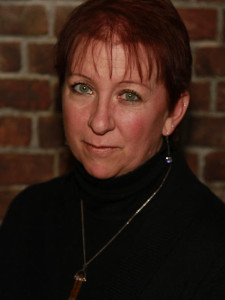
Christine Ashworth is a native of Southern California. The daughter of a writer and a psych major, she fell asleep to the sound of her father’s Royal manual typewriter for years. In a very real way, being a writer is in her blood—her father sold his first novel before he turned forty; her brother sold his first book before he turned twenty-five.
At the tender age of seventeen, Christine fell in love with a man she met while dancing in a ballet company. She married the brilliant actor/dancer/painter/music man, and they now have two tall sons who are as brilliant as their parents, which keeps the dinner conversation lively.
Christine’s two dogs rule the outside, defending her vegetable garden from the squirrels, while a polydactyl rescue cat holds court inside the house. Everything else is in a state of flux, leaving her home life a cross between a comedy improv class and a think-tank for the defense of humans against zombies and demons.
So Christine and I talked, and though my skype webcam didn’t work, hers did. So I could stay in my stained t-shirt and sweats. Kidding.
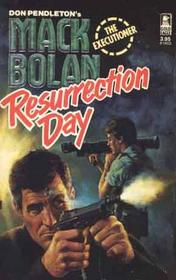 AARON: Christine, first off, you come from a family of writers! No really, when you said your dad, Chet Cunningham, wrote some of the MACK BOLAN series (yes, all caps), I had a fangirl moment. I get those, but I assure you, I’m all man. What are the benefits of coming from a family of writers? What are the drawbacks?
CHRISTINE: Oh man, I totally love that you are a Mack Bolan fan! As far as the Skype caper, I put on mascara for you, lol! (Yes, be impressed. I don’t wear much mascara anymore.)
But to your question. As far as drawbacks go, having both my dad and my brother, Scott Cunningham, as writers was intimidating. I won’t lie. My dad’s work ethic was just huge. My brother and I shared an apartment together for about 8 months—he was 22, I was 18—before I got a job at Arizona Ballet Company and I moved away. I was rarely there, but when I was his typewriter was going like crazy.
One benefit? I grew up knowing it was possible to earn a living and raise a family as a writer. The other benefit? Essay tests came really easy to me – I almost always got A’s. I like to think it’s because the teacher never bothered to read my extensive answers, scribbled on the tiny space left open for answers.
AARON: My daughter once said to me, “Dad, it’s hard being the daughter of a writer.” What advice can you give to all daughters of writers out there?
CHRISTINE: This is too funny! I love being the daughter of a writer. When I was growing up, my dad was always at home – both my parents were always at home, which was a luxury in the late 1960’s early 1970’s. Plus, I got to play with office supplies. I am a total office supply junkie…I have way too many types of post-it notes and pens/pencils. And the books! We had books coming out of our ears, and no book was off-limits even if I had to stand on my dad’s desk when the parents were away to get “those” books off the top shelf, way up by the ceiling. Of course, I also had to look up words that I didn’t know the meaning of, and that I didn’t pronounce correctly. Two things I have enjoyed doing to torture my own kids.
But…if I had to give out advice to other daughters of writers, I’d say – Enjoy. Enjoy to the fullest. Know that your parent is living his/her dream of sharing their imagination with the world. Know that you too can be a writer, if that’s the path you choose, but whatever you do, follow your dreams. Know also that your parent won’t hate you for not being a writer. And you will rarely (if ever) be a character in one of your parent’s books.
AARON: When we talked, you said your dream was always to get a book contract with Harlequin. Can you give us a little history about where that dream came from? Do you like clowns? I like clowns, but no one else seems to, but then, one bad clown can mess you up for life.
CHRISTINE: You totally crack me up! I can take or leave clowns, personally. I’ve never had a bad one mess me up, so there you go. Regarding Harlequin – that’s a bit of a story. Way back when I was a young ballet dancer (around 12, I think), I would read the books my mom was reading. At the time she was reading Rosemary Rogers books. I think the first one I read was Sweet Savage Love. They totally hooked me into reading romance.
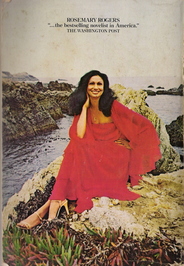
Rosemary Rogers
So, on my two-dollar allowance, I’d walk down to the corner drugstore (called Drug Mart – it was devoured by a chain a couple of decades ago), pick out a 79-cent Harlequin paperback (because the Rosemary Rogers books were much more expensive and not as prolific) and two boxes of Junior Mints, and spend my post-ballet class/rehearsal Saturday reading and munching on Junior Mints. I usually finished the book in a couple of hours. Fast-forward a couple years, and my dad would go to used bookstores, buy me the white cover Harlequin Presents novels by the yardstick, and bunches of those books would be my Christmas and birthday presents, every year for the next 2 or so years. Since my dad was a writer, it was natural that when I started thinking “I’d like to write” that I’d go toward the romance genre in general and the Harlequin brand in particular.
I didn’t start writing until 2001, but Harlequin was the publishing house I targeted for six years. After my umpteenth rejection, I veered away from the shorter books and went to the longer books. (Now I know it was because I didn’t rewrite anywhere NEAR enough.) Even though the whole publishing industry has changed, I still want to be a Harlequin writer. I’m working on a couple of projects now that I’m hoping Harlequin will like (knock wood). So you might say, Harlequin is in my blood.
Tune in tomorrow for Part Two of my Demony, Sexy, Writerly Interview with Christine Ashworth.
But today or tomorrow, if you leave a comment, I will randomly pull a name and send you a free ebook from Christine! So if you comment today and tomorrow, you double your chances of winning! No, I won’t pinch you ’cause you ain’t dreamin’.
Stalk Christine here:
Website/Blog: Http://christine-ashworth.com
Twitter
Facebook
 I Skyped with Australian Young Adult author Jacinta Maree, and I was the first American she has ever talked to face-to-face. I hope I represented the great country of the United States of American adequately. While we talked, I ate beef jerky, slurped on a 64 oz. Big Gulp full of a Monster energy drink, and cleaned my 7mm Remington hunting rifle. I had my bible prominently placed, but we’ll get to religion. Oh, yes, we will.
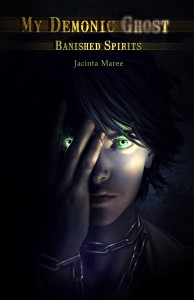 Rachael has traveled to Whitehaven to visit her father, a trek she cannot help but dread given his recent descent into madness. Upon her arrival she realizes his deterioration has not only been mental, it’s been physical as well. His death comes as no surprise, but what she discovers soon after, is shocking when his burden becomes hers. Lock is a banished spirit who must attach himself to a human host in order to hide from those who would drag him back to hell to be destroyed. When he meets Rachael he finds more than a host, he finds an ally. Together they must defeat each of the seven sins in order to guarantee Lock’s safe passage into the Third Realm, a loophole in creation that would allow him to escape hell and have peace at long last. Through their unlikely friendship, other banished spirits flock to them in hopes of a peace they hadn’t dreamt possible.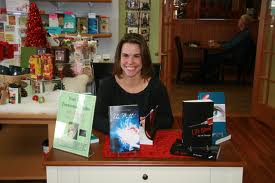
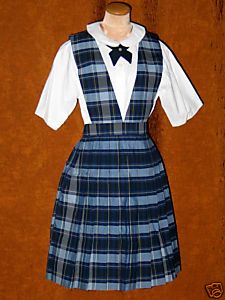 Aaron: Like me, you went to a private Catholic school, all-girl. Well, I went to an all-boy, but you get my point. Going to all-boy Catholic school left me with an unhealthy interest in existential atheism, Star Wars, and lingerie catalogs, but I digress. How do you think your school affected your writing in My Demonic Ghost, or did it?
 So, I’m finally off the road. My book has been out about nine months and I’ve been pounding the pavement, harassing people of all socio-economic classes. Those with tattoos and those without. Please, my friend, buy my book. Why you no buy my book? Is good book for you!
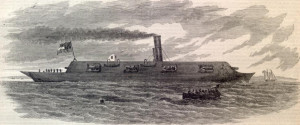
 Confeds. Unies. I made those up. Hmm, maybe I can write a dystopian novel using those names. Anyway, I first met
  Quinn: I will list the differences first. 1) Next time, I will submit an ironclad manuscript. Amazon.com’s CreateSpace platform allows authors to make revisions as they go (however, fees are charged after the first couple uploads), which, for me, is like providing additional rope with which to hang myself. I’ve never read anything, anything I’ve written without wanting to make changes, so this got me into trouble—probably added three months to the process. 2) Next time from the start, I will have a fully developed marketing plan. Hard to believe that I was caught off guard at the end of an eight-year process, but it’s true. For a long time, publication was just a concept—something that might happen on some unspecified date way in the future—and I confess that I didn’t draft a proper business plan in advance. Now I’m flying by the seat of my pants and, I would guess, achieving half as much for twice the work. Had to scramble to build a website, launch a Twitter account, etc. It’s all rather exhilarating, but that’s one of the tradeoffs with self-publication: more of the reward for all the risk (and work). Best advice I would have for other DIY’ers is to network like crazy. Find others who have gone before you and are willing to offer advice, friendly criticism, etc. Think of your book as a small business and remember that just like a business, those without goals and plans usually fail to achieve them. And finally, 2.5) I will have more focus. I took about eight or nine years to write Glorieta, in part because I occasionally set it aside for no particular reason. Not for work, my children, or life events, though at various points I did set writing it aside for those reasons, but because I lacked the discipline to stick with it. The book I’m working on now—a political drama set in an early-twentieth century company-mining town—has its own peculiar challenges, but at least I’m getting better about routinely appearing in front of the keyboard.
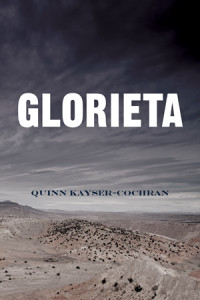 Quinn: Glorieta really began as a college paper. Years later, it became a screenplay when a friend in TV production suggested I write one. Screenplays are peculiar things with lots of formatting quirks and industry-specific rules, and I tried really hard to make mine conform to those standards (as best I understood them, anyway, given that I was teaching myself as I went, far removed from the filmmaking capitals of New York and California). An agent I worked with said that she liked it, but also that it was too literary and therefore needed changes. Well, I thought that already the story had changed to conform to rules I did not fully understand, so I decided instead to turn Glorieta into the book it wanted to be. As for the 120-page question (there’s one of those rules: one page of script equals one minute of film—120 pages/minutes is the standard. Well-knowns can break this rule; unknowns cannot), within my 120-page screenplay was 90 pages of story, and I was simply unable to say what I really wanted to in so limited a space.