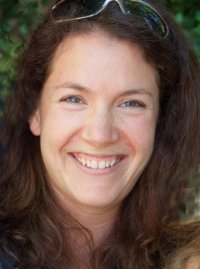
 Writers can pop up literally anywhere. In your shower, late at night. Hotel rooms in bad parts of town. Kathmandu, Nepal. We are an elusive breed, shadowy, here one minute, gone the next. So was I surprised to find that a writer was haunting the halls of the Montessori school where my children go? Not in a horribly-scarred-phantom-of-the-opera type of way. Natasha Brown was just a parent, but so much more. I wasn’t surprised that Natasha had written a book, but I was impressed by her really good Amazon ranking. And the fact she finaled in the Rocky Mountain Fiction Writers Gold contest. And that she had gone rogue, e-pubbed, and was doing well.
A little about her book, Fledgling (The Shapeshifter Chronicles):
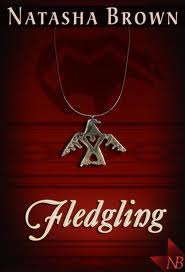 Set apart from other eighteen-year-olds, Ana Hughes knows she is different. A life-threatening heart condition smothers her future and she yearns to feel normal. Her hopes are pinned on a fresh start in a remote town far from her native Colorado. Among the locker-filled hallways in Clark Bend High, Ana keeps to the shadows, not wanting to draw attention to her violet-tinged lips and wilted silhouette. And she almost succeeds, until she meets Chance Morgan.
Struggling to keep up appearances, she soon suspects Chance is hiding something as well. His animal-like senses, miraculous healing ability and peculiar reaction to her Thunderbird necklace compel Ana to question if there’s more to the stories about his Navajo ancestry. Without any other explanation, she fears he is playing tricks on her. But the truth may prove too much for Ana’s delicate heart…
We talked, and this is a little of what we talked about.
AARON: Okay, Natasha, at what point in your life did you want to write a novel? Where were you, what were you drinking, and were olives involved?
Natasha: It was the perfect storm – inspiration, courage and my family left me alone for a whole glorious weekend. I do love olives, but alas, they weren’t involved.
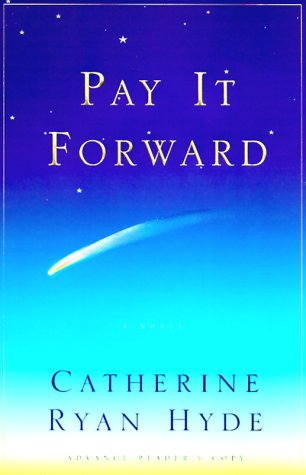
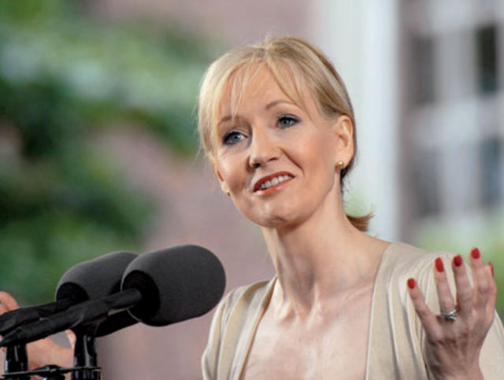
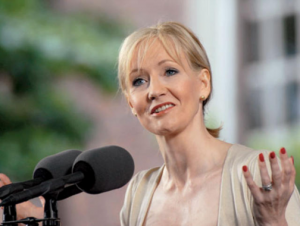
AARON: When we talked, you said you were inspired by J.K. Rowling and Stephenie Meyer. What about them inspired you? Haircuts? Choice of shoes? Mormonism? Britishism?
Natasha: They inspired me because they, like me, were mothers with an idea. An idea that they wrote down and had the tenacity to persist with. I thought if they could do it, then I would try as well.
 AARON: Let me talk about myself for a minute, because, well, I am so very fascinating. I’m a big fan of Joseph Conrad’s Heart of Darkness, which inspired the movie Apocalypse Now. Kurtz, in the jungle, going mad, worshiped by the natives. He went rogue, just like you. What made you throw off the shackles of traditional publishing to set yourself up in your jungle paradise on Amazon?
Natasha: Let me smear some war paint on my face first before I answer…
Like you mentioned earlier I finaled in the RMFW contest, which was fantastic. It gave me the confidence to start querying agents. I had a few nibbles, but ultimately it led to a dead-end. And then life happened. When you are busy with kids and work, those other things fall away, and that is what happened to FLEDGLING. Until an acquaintance found out I had a finished novel collecting dust. He had self-published and found great success. I decided, what with the state of the evolving book world, I would go ahead and give it a try myself. I am a web developer and designer so I designed my own cover. I set the hook and waited for a nibble.
AARON: Kurtz summarized his experience in the jungle with four words, well, two words repeated twice: the horror, the horror. What two words, repeated twice, summarize your experience as an independent publisher?
Natasha: Two words is all? Yeesh. Take courage, take courage.
AARON: Why do you think your Amazon ranking is so good? My ranking is like three million and fluctuates as low as eight billion, but you, you have a ranking, a steady ranking, in the thousands, which is awesome. Did I just use way too many commas? Maybe. I’m a little nervous asking this question. I’m pausing a lot.
Natasha: I stole some fairy dust and sprinkled my computer with it. Does wonders, although whenever I click my mouse, it giggles. No, seriously. I am lucky. There are SO many elements that contribute to a book doing well. Past the obvious, that the book has to be somewhat interesting and in a genre that sells, there is a lot to marketing a book. A good cover and book blurb are very important – they are the first impression. You need to be present in social media like, facebook, twitter and your own author blog. I am part of a great author group named the World Literary Café (WLC- www.worldliterarycafe.com) which provides many resources to indie and traditional authors. I couldn’t have made it this far without my new group of friends.
AARON: One of your inspirations for Fledgling was your daughter’s heart condition. What kind of heart condition does she have, and how does that play into the novel?
 Natasha: The heart issues are a huge issue in the story and everything revolves around it, much like in real life. My daughter was born with multiple heart defects. She had transposition of the great arteries, hypoplastic-left heart syndrome, and a large ventricular septal defect. That might sound like a lot of gibberish to most people, but all of those conditions caused enough trouble for my daughter to have two open-heart surgeries. Heart defects make up about a third of all children born with birth defects. My daughter is not alone. The personality and specific circumstances of my daughter are not the same as the lead character in my book, but they do share many of the same experiences. I wanted to create a female lead who could be a heroine for my daughter to look up to. For anyone who was born with heart defects.
AARON: We talked about how hard the writer’s journey is. What themes in Fledgling could inspire a struggling writer to keep on keeping on?
Natasha: A writer’s journey can be tortured to be sure, but it is so much broader than that. Being a teenager has its challenges as well, and I think they are much the same. Will they like me? Will I fit in? Stand out? I’m not good enough.
Self-doubt and insecurities plague everyone. Especially writers. FLEDGLING, I hope, will leave the reader uplifted and hopeful. My own story, and even my daughter’s story, I hope, will inspire as well. You CAN do it if you persevere.
AARON: Natasha, if you had to exchange your writer’s life for another artistic passion, what would you choose? For example, if I had to give up writing for some other type of creative art, I wouldn’t choose rockstar or famous Parisian painter, I’d choose quilting. Dudes who quilt are dead sexy. What about you?
Natasha: Dead sexy to be sure…I think you even have another book idea in there.
My father is a fine art photographer (and in another life, a graphic artist) and my mother does poetry. Artistry is in my blood. I have dabbled with quilting, stained glass, painting, photography, jewelry making and graphic design. I’m not sure what else I could try, but I’m only happy when I am creating something. I wouldn’t mind hanging in Italy, the country where I got engaged, and just ‘go with the flow’.
 AARON: Thanks Natasha!
Natasha: And thank you, Aaron!
Website for the book
Natasha on twitter
Fledgling on Amazon
 A lot of people say that the principle behind the 2nd step is hope, and I think that’s right. We hope that we can be restored to sanity, that we can live at peace with ourselves and with our writing. Yes, a lot of writers become very successful and they fight and spit and growl through the process, but that’s not my ideal. And again, I say, if I can write and handle the writing game sanely, everyone wins. I win, my critique group wins, my family wins, everyone.