Today, I Do The Impossible. I Launch My Book. I Interview Myself. We are Mighty.

Guess what? My book is out today. I have an ISBN that I am going to tattoo onto my flesh.

First off, if you are in Colorado, and if you aren’t incarcerated, come and join me for my book launch tonight at Hanson’s Bar and Grill in Denver.  The Facebook event is here!

But yes, my dreams of youth have come true in a very real, very worldly, very dirty way.

That’s the world, real, dirty—imperfect. Since March 29, 2012 rates up there with all the important dates in my life, I decided to do the impossible. Any book that gets published is an impossibility, even those self-published. It’s all impossible. So, I am going to interview myself. Yeah, you got it. It’s very Billy Idolish. Let me sink another drink…


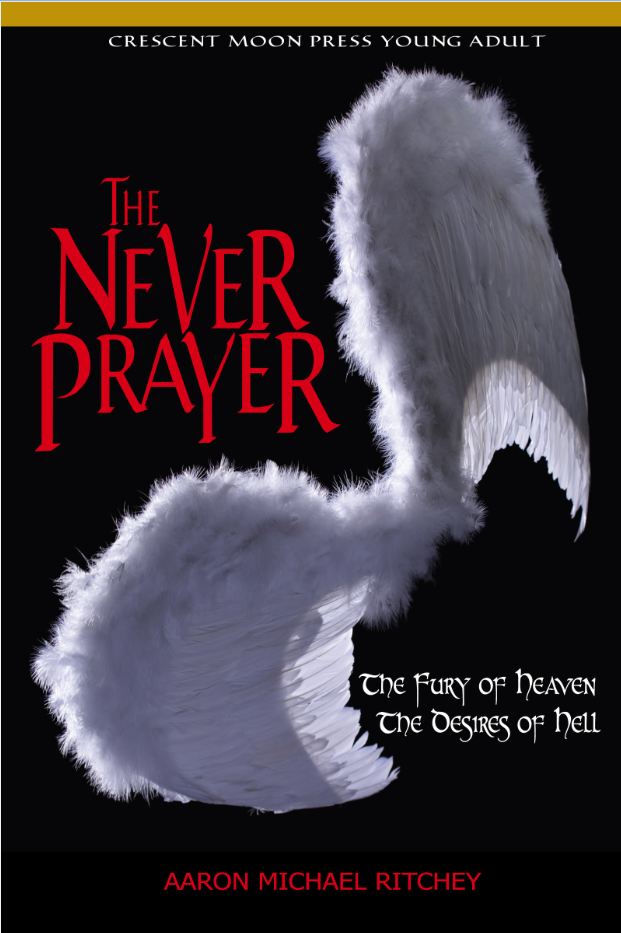
Ah, this Aaron Ritchey, this guy. You want his bio? Click ‘round on this here website. You want a synopsis of The Never Prayer? Same thing. Click around. My short pitch is that my novel is about love, angels, demons, drug addicts, and atheists. And it really is.

So, let’s get to the weirdness? Your Honor, permission to treat the witness as hostile.

Permission granted.
 

AMR1: So, Aaron, your first book published? Is this the first book you ever wrote?



AMR2: That’s a bad question. I’ll answer it, but I ain’t happy. Nope. My first book, way back when, I began when I was listening to the song, Mailman by Soundgarden in 1994. I had always wanted to be a writer, from day one. It was my secret dream. And I had stories and characters floating around in me my whole life. That first novel, The Dream of the Archer, it was big, beefy, postmodern, Shakespearean, David Lynchian! It was epic! And wordy. And I tried to pack too much into the book and it bloated up like a novel dunked in the bathtub. It took me years of critique groups, study, book-readin’, for me to write a novel tight enough and good enough to make it through the gauntlet of getting published. Like that old Clint Eastwood movie. Sondra Locke. Ugh.

AMR1: Let’s keep on track. No wandering off. Okay? So what kept you from sending out query letters for the books you wrote?
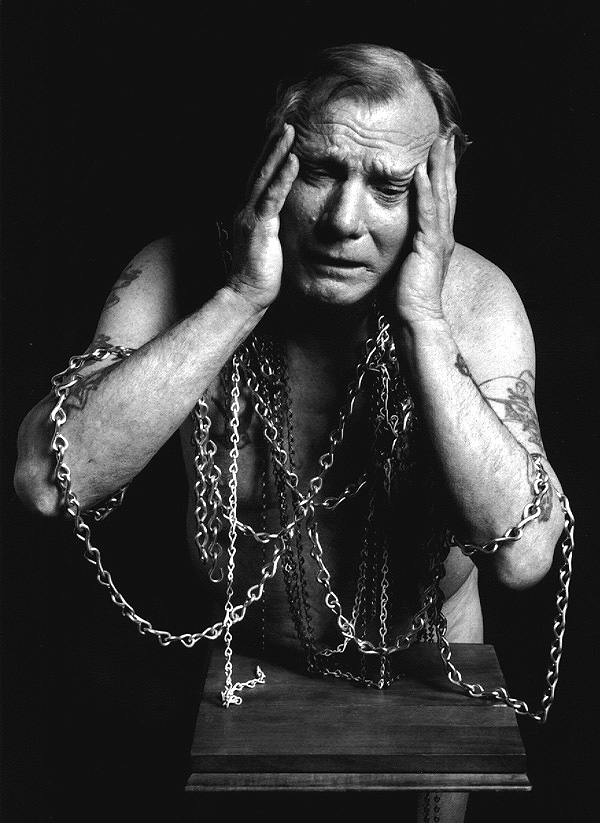
AMR2: Terror, mostly. And I was locked in my basement, in chains, by a madman, for years on end. The madman, being, of course, me. I didn’t know where to start with the pitching and query letters and synopsiseseses. I was lost and forsaken. It was only until I became desperate that I asked for help. And I’ll wander. Damn you.

AMR1: What made The Never Prayer different? Why query this novel and not just shove it away into a drawer like all the others–12, is that right?

AMR2: Well, I wrote a 500,000-word trilogy that I count as one book. But yeah, 12 books, in various stages of revision. One I almost got an agent with, but it was too dark and ironically suicidal. People have a hard time with suicide, and with ironic suicide, my main character came off whiny to a lot of people. I queried 10 agents with The Suicide King, but it never made it. The Never Prayer was a perfect storm. I had gotten a handle on story, and so the narrative is so tight it squeaks. It’s a nice length, about 67,000 words. And it is very me. Angst-ridden, desperate for meaning, searching for the Divine, and the characters are the same way, and it just all worked well. I continued to believe in it even after other people critiqued it. And it’s nice to have a story that people are familiar with, angels and demons, yes, everyone knows about angels and demons, and love, and Twilight, and sparkly vampires. But what I did with the whole angels and demon thing, it’s unique to me. I hope it works.

AMR1: How is your book different from your standard good versus evil book? I mean, it’s all been done. There is nothing new. We are writing in post-postmodernism. The literature of exhaustion, gone to bed, 3 a.m., nothing stirring, no creature awake.

AMR2: Everyone wants to make the Divine clean and perfect and something we can understand. God, Satan, angels and demons, it’s not a crystal castle in the clouds shining down in wonder and perfection. It’s a mud puddle. My angels and demons are mruky creatures, hard to understand, driven, but flawed. If we could logically understand the Divine, it would be a horror. My book is not good against evil. It’s hope against despair. It’s wisdom versus hunger. It’s selflessness versus canoli. It is not a clean fight. It’s mud-puddle dirty.
AMR1: Who would you want to have coffee with? Your hero, your heroine, or your villain?

AMR2: You ask other authors better questions. How come I don’t get the bar question? Or the wedding planner question? Okay, okay, coffee. I can’t go into a lot of detail because I don’t want to give anything away. At the beginning of the book, it’s not exactly clear who is the villain and who is the hero.

My villain is bad news. When I was writing the book, I would get so upset with him because he is righteously horrible. He’s this wounded soul who hungers and will never be filled, who wants everyone to feel the chaos he has inside of him. Would I want to have coffee with a guy like that? He’d be messing with everyone in the Starbucks and we’d eventually get thrown out. My hero, on the other hand, is just as wounded, but angry, serious, driven by a relentless need to fix the world. In the Starbucks, he’d be counseling the barista on whether she should leave her boyfriend or not. Again, not good company.

Which leaves me with Lena. Who would be drinking venti triple-shot lattes, worried about her brother, grieving over her parents, fighting with her aunt. We could talk music, maybe, but her mind wouldn’t be in the conversation.

Great, I’ve written a novel where I wouldn’t want to have coffee with any of the major characters. The minor characters? I would love to chat with Santiago about his recovery, or Pockets about Battlestar Galactica (best show ever), or Gramma Scar about her five husbands, or Deirdre Dodson about her fashionista ways. The supporting cast is a whole lot happier and easier to get along with. I did that on purpose. I did try and lighten things up with the supporting characters because the book starts off really dark. But things get better as Lena finds her support group.

Johnny Beels would make an awesome wedding planner, however.

AMR1: Are you done? I kinda’ fell asleep. So what emotion do you want readers to leave The Never Prayer feeling?

AMR2: Jeeze, man. What the hell? You were nicer to your other guests. I feel so self-abused. Of course, I wanna leave ‘em all in tears, yo. I cried all the way through this book because Lena has it rough and she wants to get through, but it’s hard on her. But in the end, there is hope, always hope, to change ourselves and to change the world. So yeah, I’d like readers to leave heartbroken but hopeful. Lena makes it through to the other side of her grief. But she pays a price. Gosh, I love this book. I’m so glad this is my first book ever published. I feel so proud to have written it.

AMR1: How fortunate you are. Sad books sell tons. Yeah, uh huh, great. I wish you luck, bro. Okay, this is the big question, and I know you don’t want me to ask you this question, but here it is: if you could take a pill to erase all desire to write without any regrets, would you take it? It’s a one-shot deal, like the red/blue pill in The Matrix. You take it and you are no longer a writer. Would you take it?

AMR2: Thanks, the one question I didn’t want to answer, you ask me. That’s just great. The acceptable answer is no, not me. I love to write. I was born to write. “In the day we sweat it out on the streets of a runaway American dream…”

The truth? I’d be a better husband, a better father, a better everything if I didn’t have this need to write fiction. I could write other people’s biographies. Everyone is always wanting to me write their memoirs. If I didn’t have this fiction thing, I’d have the time. I could watch more baseball. I could work out more. If I had the pill, I would take it. I’d get countless hours back to do a million other things.
But there is no pill. If I could have quit writing, I would have. But, though it is a burden, the benefits are legion. I get to be with other writers. I get the joy of finishing a story and looking back and enjoying the moments of feeling the Divine guide my pen. Er, fingers on keyboard. My friend Chris Devlin felt sorry for me because I didn’t like the actual writing. So I decided to love it like nothing else. And magically, it has become wonderful. The actual writing. All the other stuff around it, the marketing, the selling, the publishing woes, that stuff is still hard. Query letters. Hard. But the writing? Good.

Ernest Hemingway said, “Once writing has become your major vice and greatest pleasure only death can stop it.” That has happened to me. I’m in this for the duration.

I will always write books. I will never stop. Ever. It’s too late for me. If you can quit writing, quit now. If you can’t, God help you. God help us all. But enjoy the ride. Henry Miller said it. The only reward for writing is writing.

So let the words flow. Peace out!

I Get Evanescent and Knighted With Karen Duvall

On her profile it says Karen Duvall likes Dan Fogelberg and Evanescence. Dude, right there, I gotta talk to her. And she is a Native Californian who lived for a while in Colorado and now lives in Bend, Oregon. Dude, I’m a Native Coloradoan who lived for a while in California and I’ve been in Bend, Oregon. Coincidence? I think not. She has children, I have children. She has grandchildren, I might get dogs. She is a graphic artist. I like pretty things. See? See? Weird.

Anyway, for Karen’s complete profile, click here.


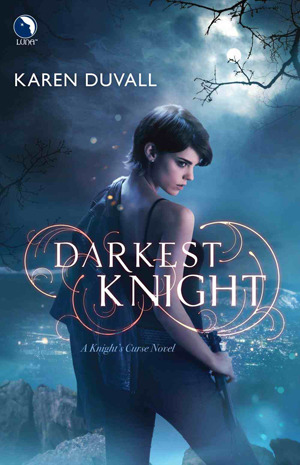
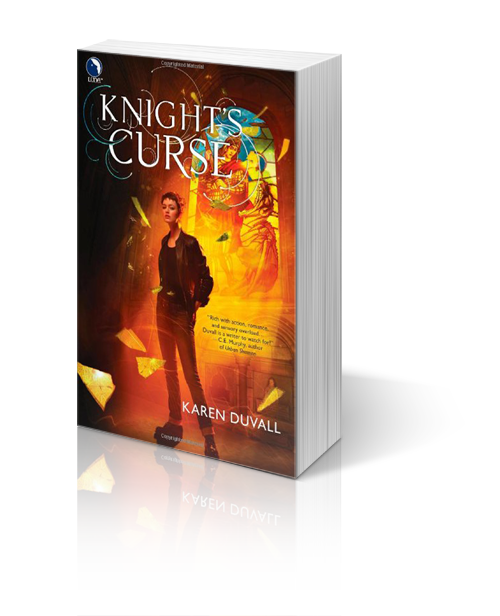
Her new book, Darkest Knight, just came out from Harlequin Luna. It is the sequel to Knight’s Curse. Here is the scoop on the sequel:

Now free of the curse that enslaved her, Chalice pledges to join her sister knights in The Order of the Hatchet. But someone—or something—is murdering her sisters in their sleep, provoking fear and suspicion among the order. Meanwhile, Aydin, unable to stay away, starts haunting Chalice’s dreams, urging her onward. Ultimately, Chalice will be faced with an agonizing choice— one that will tear away at her newfound identity and force her to choose between duty and desire…

I chatted with Karen Duvall at the airport. It was very dramatic. I mean, I was at the Denver airport and she was at home in Oregon. The coincidences just don’t stop. Here is the interview. Beware, your spine will tingle.

Aaron: Let’s start out slow. Evanescence. Did you like their albums post Fallen? Fallen was brilliant, but what about The Open Door? Or their new one from 2011?

Karen: Amy is fabulous! There’s not a single song of hers that I don’t like. Her voice, her style, her lyrics, it’s all amazing. As a matter of fact, Evanescence’s music personifies Chalice, the main character in my Knight’s Curse books. I can’t listen to music while I’m writing, but I’m inspired by music when I prewrite, and I listened to Evanescence as I developed Chalice’s character. That album was Fallen. I think I may have memorized every song. Based on the looks I got from people while I sang along in my car, I think I got it down pretty darn good.

Aaron: Okay, got that out of the way. You’ve been doing cover art for writers and I find this fascinating. A novelist who does covers for other novelists. It’s so meta. How does being a writer help you with doing covers for other writers? Do you ever let your own ideas of the book effect what you do with the cover?

Karen: I’ve been a graphic designer for over 30 years, so I understand my clients and the commercial viability of pleasing aesthetics. 🙂 I understand what authors want because I am one. I KNOW how important a cover is, and I know authors have a specific image in mind of how they want their cover to look. I can help them get as close as possible to achieving that image. I’m a card-carrying member of Photoshop Professionals, so I have the expertise.

As for letting my own ideas of the book affect what I do with the cover, I’d have to say no. Most of the time I’ve never read the book and rely on the author to feed me information. I read the blurb, I have them fill out a questionnaire, I ask them what covers they’ve seen that use a style they like. Then I work toward creating a book cover they can be proud of.

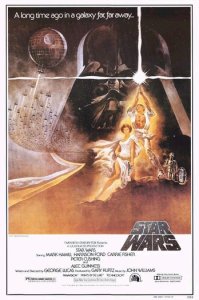
Aaron: Okay, time machine question. Are you ready? A time machine takes you back to 1977. George Lucas asks you to do the movie poster for Star Wars. What would you do?

Karen: Considering I stood in a line that wound around two blocks when the movie first came out, I know exactly what I’d have done with the poster. I was in art school at the time and the poster was an excellent example of the collage/montage trend for movie posters. So back in 1977, I wouldn’t have changed a thing. But today is a totally different matter. Busy posters are out, a more editorial approach is in. So if you’d asked how I’d design that poster today, I’d probably single out an image indicative of the movie’s theme. You’re not going to make me watch that movie again, are you? It’s not that I don’t love Star Wars, I have the boxed set on VHS, but… 🙂

Aaron: You have had the writer’s journey of heartbreak, hope, and hernias. You said something interesting. You said with every rejection, you felt a little relieved. Why is that? In what ways is rejection good?

Karen: Ah, yes. A lot of relief comes with rejection, and I’ll explain why. Let’s say you have your heart set on someone you have decided is your “dream agent.” You’ve done your due diligence, established that he or she represents authors with books similar to yours in genre or theme, learned that this agent has made some big publishing deals, and you just know the two of you are a match made in heaven. Then the crushing rejection arrives. You have every right to feel disappointed, but please realize the match you imagined is one-sided. Do you really want an agent representing you who isn’t behind you or your book? What if that agent had said yes, I’ll sign you right now, and it turns out they just aren’t into you? They’re not enthusiastic about your book, which translates as lukewarm interest to the editors they approach on your behalf. You don’t want that agent. You want an agent who wants YOU. One who will champion your book and your career. So take heart when that rejection arrives because that’s when you know you’ve dodged a dangerous bullet. Your dream agent is still out there. You just haven’t found him yet. Keep looking.

Aaron: Which is more overwhelming? Writing books or trying to market and sell books? Why is that? Extra points for explaining your answer fully. And in verse. Kidding. Unless you are feeling poetic.

Karen: Writing books is fun. Marketing them is a pain in the ass because it takes time away from writing them, which is what you’d rather be doing. So the whole marketing/promo thing is a double-edged sword: You need to sell the books you write. Unless you’re just writing for yourself, but that’s another issue altogether. I’m talking about writing as a viable, income-generating career.

Now we have more options for how we choose to publish, which is great, but there’s a lot of self-promotion work to be done no matter what option you choose. Being published with one of the Big 6 by no means guarantees great sales right off the bat. That’s up to you, unless you’re a NYT bestseller, then they’ll make the effort to get your name out there. Until then, you’re on your own, and it’s a time-consuming venture.

Aaron: You are published through Harlequin Luna. Romance-y? Urban Fantasy? Not your mother’s harlequin—killer clowns, yeah? Talk a little bit about your publisher.

Karen: Romantic killer clowns disguised as Cupid. Hahaha, kidding. Well, Luna is Harlequin’s fantasy imprint, which means the books have strong romantic elements and are set in a fantasy world, but they’re by no means romance. The books all have a strong female heroine who dominates the story, and she has a love interest that helps and hinders her efforts at reaching her goal. Gotta have that conflict!

Harlequin is a global publisher that’s been a leader of publishing books for women since 1949. I love the company’s team approach to working with authors. You don’t just get an editor, you also get a copy editor, assistant, marketing department, and regularly scheduled workshops on social networking that are presented via webinar every month. Harlequin is a very focused company that knows the business of books.

Aaron: Knight’s Curse came out in 2011. Book two of the series, Darkest Knight, is just out. Your brand new baby. What central idea or strong vision did you have for Darkest Knight? Kinda’ like your pitch, but the central idea doesn’t have to be so market-y. What was the burning image that led you through the book?

Karen: In the last book, I’d left Chalice happy to have her curse broken, but the consequences of her good fortune turned the man she loves into a monster. She needs to fix it, which is what she attempts to do in the second book. But that’s not her only problem. Chalice’s internal drive is to belong, and to join her sister knights so she can finally be part of a real family. Just when she’s in a position to connect with her fellow Hatchet Knights, she learns that almost all of them are dead. And she’s indirectly responsible for their murder. Not only must she find a way to change the man she loves back into a man, she must also find who murdered her sisters.

Aaron: If you had to choose, which character in your book would make the best wedding planner? Your heroine, your hero, or your villain? Why?

Karen: Oh, hands down it has to be my villainess. Yep, she became quite the expert when she planned the wedding for Chalice and her guardian angel, who is not the man she’s in love with. My villainess has her own special brand of wedding protocol, and it ain’t pretty.

Aaron: When we talked, you said that writing helps you work out your personal issues and exercise some of your demons. What demons did you soothe with Knight’s Curse? Did you work out different issues with the sequel, Darkest Knight? You can answer in a general way unless the skeletons in the closet are battering down the door. Then free the skeletons and give us every little detail.

Karen: I have no problem talking about my personal demons. If you read my blog, you’ll see I regularly post rather quirky yet personal stories that reveal more about me than my books do. As for Knight’s Curse, Chalice is adopted, and so am I. So I pulled some of those emotions from my own experience and my need to belong. I had trouble connecting emotionally as a child and it was something I’ve had to work hard to overcome. Allowing myself to write out the issues I’m not always capable of acting out has been cathartic for me over the years. Fiction is a great way to exorcise demons from the psyche. Though “exercising” may be more appropriate since my demons, as well as myself, could use more treadmill action. Too much BICHOK (Butt In Chair Hands On Keyboard).

Thanks Karen!


Knight’s Curse website
Karen’s blog
Amazon author page
Karen on Facebook
Follow her on twitter

The 12 Steps to Writing Success, Part 04: My History As A Failure and A Scaredy-Cat

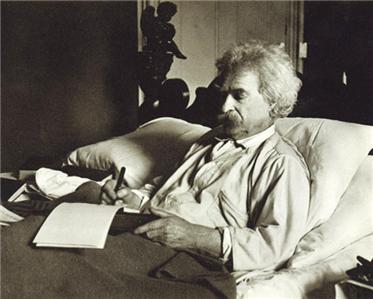
I was born modest; not all over, but in spots.
— Mark Twain
This is where I tell you why I’m the perfect guy to blog about despair and artistic angst and writers’ block like a cinder block smashing down on the keys of your laptop.

Bottom line is this: my credentials are more about the internal wounds I’ve overcome than the external honors I’ve been given. Which are sparse. It took me five years to finish my first novel, and I was too afraid to try to seek a publisher. The fact that very few people could read it didn’t quite bolster my confidence. It took me another seven to finish my next novel, and I was still unwilling to get help from anyone. And I still kept my writing life a secret from everyone. My wife would knock on the door, and I’d shuffle away my papers.

“What are you doing, Aaron?”

“Nothing. Not writing. Not me. Uh huh.”

Let’s fast forward? Or rewind. Or both. I always wanted to be a writer, ever since I was little. That was the dream. Aaron Ritchey, writer. On the first day of kindergarten, when the teacher told me to get out my crayons and paper, I asked, “Is this going to help me read and write?”

The answer was no. We were going to color. “Well,” I said, “I can color at home.” So I packed up my grip and walked home. I was five. It was clear what I wanted.

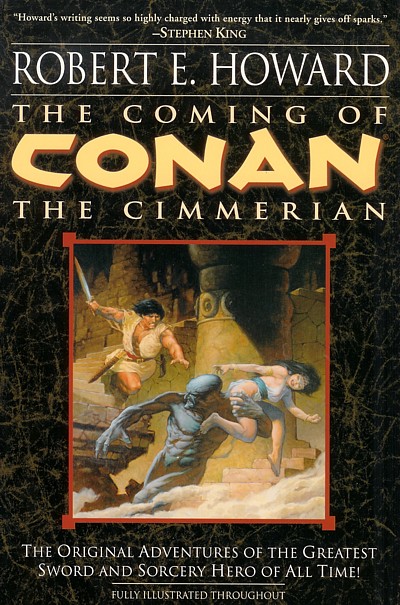
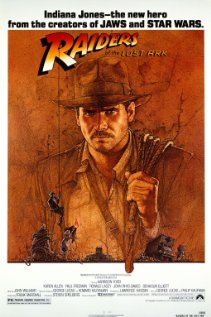
And I wrote Indiana Jones/Conan fanfiction. Of course, I combined them. Jase Kilner and his race through the lost city of whatever. Still a cool name, Jase Kilner.


I re-did Little Bo Peep, but added a hardboiled bounty hunter to help the luscious Bo Peep get back her sheep. There were wolves, but our hero had a shotgun. He was too cool to have a name. Too Clint Eastwood-y.

I loved to write stories, and my parents would eagerly wait to read what I had written. I had a fan base in the 3rd grade. My mom and dad. Garsh.

But then fear took hold. Bad fear. In high school, we had a literary magazine, and we’d vote on which stories we wanted to include. I always voted for myself, and I always lost to Pat Engelking, who was a better writer than me. But I hated that feeling, voting for myself. It felt horrible and I felt cursed to lose.

In the next twenty years, I wrote twelve novels. But was too afraid to shop them around.
Which brings up an important lesson. Always vote for yourself and vote with pride. Sending out query letters is voting for yourself. Now, if someone else has something better, vote for them, but if you’re all about the same, go for it, baby. We have to be our biggest fans because writers spend most of their time reading and re-reading their own work. It’s called revision. Be your own fan. Hell, be your own groupie. I won’t go any further on that.

So here I was, twenty years of writing, full of fear and regret. But I finally worked through the angst and terror and I sent out sixty queries to agents, editors, and presses, and I got picked up by a small press. That is my story. Along the way, I’ve spent 20 years working the 12 steps with my sponsor, and I’ve guided dozens of people through the 12 steps as a sponsor. I’ve been in recovery, without a relapse, for 21 years. As of today, everyone knows I’m a writer. And I keep on spreading the word.

I have overcome many of my deepest, darkest fears and self-limiting beliefs, and I can help others do the same. Hopefully, you can do it in a couple of months and it won’t take you decades. Hopefully.

A little bit more about me. Just your typical stuff because in the end, I’m just a typical guy. Oh, how I long to be so much more. But I’m not. Just a writer who plods along. Do-de-do-de-do.

In the middle of all that novel-writing, my wife and I spent 15 months traveling around the world. We settled down in Colorado where we raise two James-Bond-Super-Villains-In-Training who pose as little girls and who adore American girl dolls. Which of course is a plot to transfer wealth out of the middle class into Mattel’s evil laboratories.

When I’m not writing or speaking at writing conferences, I work at a computer company troubleshooting software, which is far more dull than it sounds.

I say all of that to say this. I failed at a deep level with my writing. Because of my own fear, because of my doubt, and because of my overly-dramatic self. I can “should” all over myself, all day long. I should have joined a critique group right away. I should have worked on short stories. I should have studied craft. I should have queried every day for years on end. Ray Bradbury had thousands of rejections before he published anything. Stephen King, same story.

But just because I failed yesterday, doesn’t mean I have to fail today. As long as I work through the angst to get to the other side. And there is another side for all of us. But it takes work and effort.

That’s what the rest of my blog posts are going to be all about. Working through the angst and trauma to get to the other side.

Next week:  Step one. Admitted we were powerless over our art and our creative lives had become unmanageable.