Tuesday 12 Steps – Step One Continued: Hitting Bottom

Step 1 – Admitted we were powerless over our art and our creative lives had become unmanageable.

The first step in a 12-step program has ZERO solution in it. The first step is about being so shattered, so broken, so sick and tired of being sick and tired, that I will do anything to change. Anything at all.

It’s like the story of the pacifist who was also a prince. As a prince, he was required to carry a sword as a sign of his station, but he was also a pacifist and believed strongly in non-violence.

So torn, so filled with conflict, he went to a church elder and told the elder about his situation. How do I carry a sword and be a pacifist at the same time?

The elder said, “Carry the sword until it is too heavy to carry.”

The first step is about realizing that the goddamn sword is so heavy it’s breaking our goddamn backs.

And of course, as everyone knows, the first step is about the bottom. The depths of despair. Hopelessness.

My bottom came six years ago when I attended my very first writers’ workshop, in Big Sur, California. It started out heroic. I was Achilles, sword, shield, even a printer because my wife and I just knew that the agent would want me to print out a copy right then and there. Still, even though I was armed for success, I was terrified. I was shaking. My eyes were bunny rabbit-wide open.

I sat down in front of the agent, and she knew I was about to implode, because she asked me, “Are you all right?” She moved a little toward the door.

I said, “Yeah, sure, go on.” Inside, I was approaching the guillotine.

And then she hit me with every inch of a beating stick. Because I was an amateur. Because what I had was rough. Because I thought I could write in isolation, without help, without guidance, and if I couldn’t do it on my own, I didn’t want to succeed.

At one point, she leaned back, winced, pointed to my pages and said, “Where are you going with all this?”

I tried to fumble around to explain the characters, the stories, the things I so loved about my book. But of course, it was too late. I was reduced to ashes. It broke me. My worst fears had come true.

I had hit bottom. I couldn’t walk this writers’ journey alone.

I used to say that first rejection was when my writing dreams were destroyed. That’s not really what happened. What happened was my fantasies were destroyed. The fantasies of an overnight success, where I went from obscurity to fame and fortune because of my innate genius.
That fantasy died with that agent. The dream continues. Because the dream is that I can write and enjoy it. I can move people and give my voice to the world of literature and art because I have a unique voice. That is the dream. And when I’m writing, working, creating, marketing, overcoming fears, I am living that dream. Will I ever be a bestselling, jet-owning, fun-loving author loved by billions? I don’t know. That’s the fantasy, and some people get to live that. For me, the dream has to be what I do every day, right now.


In the words of that Canadian power-trio rock band, and I don’t mean Triumph, “Some are born to rule the world to live their fantasies. But most of us just dream about the things we’d like to be…”

That’s Neil Peart from Rush. And those words are true.

Hitting bottom can be dramatic, like what happened to me, like what happened to Sid Vicious, and to other hardcore addicts and alcoholics, but not necessarily so.

A little piece of 12-step program; you hit bottom when you stop digging, turn around and start climbing out of the hole you’ve dug.

A bottom is a turning point, where you realize you have a problem and seek help. And it might be getting locked up for not writing and sitting in San Quentin with tattooed murderers.

“Whatcha’ in for?”
“I killed and ate my family. What’re you in for?”
“I couldn’t write. Snapped. Burned all my manuscripts.”
“Damn. Book burner. Hardcore.”

Or it might be a Tuesday, and you are in bed, and you realize, “Another day I didn’t write. Why can’t I find the time? What is wrong with me?”

The only important thing about a bottom is that you change. That’s the critical part.
Mondays Are Hell: The Seal-Wife, or Sometimes Fathers Are Stupid

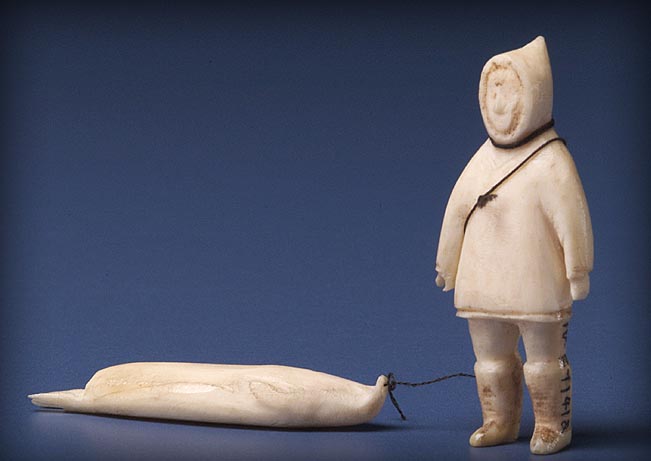
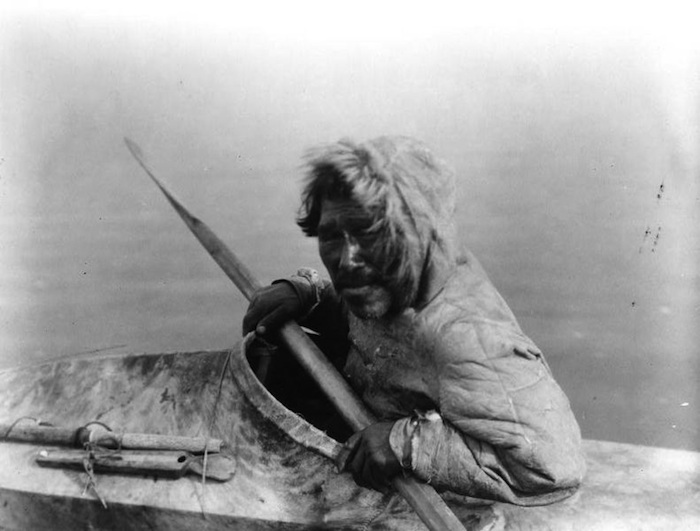
Wanna hear a cool Eskimo demon story? No, seriously. I’ll tell you one. But I warn you, there are some issues with it.

First of all, the right word is Inuit, not Eskimo. First problem.

Secondly, I heard it as a witch story, but for my blog, I’ll change it to demon. Because, of course, Mondays are hell.

Thirdly, I read it when I was in the sixth grade, which is a whole lotta’ sleepless nights ago. So this isn’t precisely the story, but close enough. My daughters and I were playing hellish tundra, such a fun game, and I re-told them this story. Here it is. But I warn you, it is a grisly tale.
* * *
The storm, oh the storm. The wind, oh the wind. The snow, oh the snow.

It was the worst storm anyone had ever seen. It was a storm that would freeze the spit in your mouth if you left your igloo. It would turn your blood to ice. It would harden your eyeballs until they popped out of your head. It was a hellish storm.

And it brought demons.

A father and his family were huddled in their igloo, fearful over the storm. And the children cried out, holding their bellies, complaining. “Father, go out and bring us fresh food!”

“Wife,” the father said, “I must go out and brave the storm to feed my children.”

“If you go, we’ll die,” the wife said, for she was very wise. “Let the children eat the leftover fat.”

“My children deserve fresh meat,” the father said, for his wisdom was yet to come.

He left his family and fought through the wind and snow and the ice and the freeze. He found a seal hole and with his harpoon freezing to his hand, waited, praying, waited, praying. Please, God, bring me a seal. Please, God, protect my family. Please, God. Please.

But sometimes God does not listen. For a demon, riding gleefully on the killing wind, found the igloo of the family. With the father gone, the she-demon broke through the snow door and killed the wife and ate up the children.

This demon was clever and deceitful. She cut off the skin of the wife and dressed herself in the wife’s face in order to trick the father.

Sometimes God does hear a father’s prayer, and the father caught a seal, and with the seal freezing in his hands, the father returned to his igloo and found his wife, huddled by the seal-fat fire, warming her hands. It was dark, so the father couldn’t see the seams of his wife’s skin covering the demon. But he knew something was wrong.

“Where are our children?” the father asked.

“Oh, they are outside playing,” the demon-wife said.

And the father became a little wiser. “I brought a seal. Are you hungry?”
“No, I’m quite full,” the demon-wife said.

And the father became a little more wise. Wise enough to know that his family was dead, and he would die too if he weren’t clever enough to outwit the demon. “Help me with my harpoon,” the father said. “We can sharpen it together, my good wife whom I love so much.”

And when the demon took a hold of the harpoon, the father drove it into her belly to find his children still alive. He took them out, but when they unwrapped their mother’s skin from around the demon, the children cried fretfully, “Our mother is dead! Our mother is dead!”

But the father had learned wisdom, and he took his wife’s skin and sewed it around the seal he had caught. And once he tied off the last piece of seal gut, his wife opened her eyes. “Husband, you have come back. Did you find a seal?”

“No,” the father said, “but I learned wisdom. Sometimes it is good to listen to one’s wife.”

And the family ate the leftover seal fat, and the wind blew, and ever after, the father’s wife always knew where the best seal holes were, and no one could match her skill at catching them.

“You have a good wife,” people would say to the father.

The father would nod. “Yes, she is a good wife. And very, very wise.”

Heavenly Fridays – Angels by Linda Rohrbough

I interviewed Linda Rohrbough awhile back, and you can click here where it’s all bluey to see, but I badgered her to return to talk angels because after all, Fridays are Heavenly.  I can sum up Linda Rohrbough in one word: angelic!  Here is her blog post.

* * *

What I think is interesting about angels is the concept that there’s another dimension parallel with ours populated by beings who slip in and out of our reality at will. They look enough like us that we don’t recognize them as not human. It all sounds very “Star Trekkie.”

In the Bible, angels often showed up looking like road-weary travelers in need of food and rest, not powerful beings sent to bring a message, a blessing, or to defend someone. Hence the statement in the New Testament that many have entertained angels “unawares.” Angels were sent to Abraham and Sarah to announce that Sarah would have a son in her old age. And the couple ended up fixing the angels a meal before they knew who they were dealing with.

Gideon also did not know he was talking to an angel until the angel disappeared after being presented with a meal.

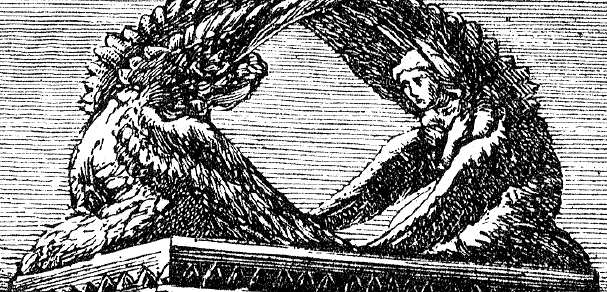
There are all kinds of odd tidbits I’ve heard about angels, like some have musical organs built into their bodies. And I guess they come in all shapes and sizes. With wings, without wings. I’m especially curious about Cherubim, which are depicted facing each other with wings outstretched atop the Ark of the Covenant that Israel carried around as a symbol of God’s presence.

But being a practical person, what I go back to over and over again is the concept that angels often show up looking like someone in need. Occasionally, I run into people who treat others differently depending on what they think the other person can do for them. You know the type. If they think you’re important, you’re in. The charm flows. But if you’re not, it’s like you don’t exist. I had that experience recently. Someone I was interacting with treated me like I wasn’t worth talking to and I even experienced short, verbal attacks. Until they found out more about me. Now I get the red carpet.

I get tempted sometimes to make a wide circle around someone I think is going to cost me to be around. What I keep coming back to is, the Bible cautions us not to do that. Because you never know who you’re dealing with. And that makes me smile.


Linda Rohrbough has been writing since 1989, and has more than 5,000 articles and seven books to her credit along with national awards for her fiction and non-fiction. New York Times #1 bestselling author Debbie Macomber said about Linda’s new novel: “This is fast-paced, thrilling, edge-of-the-seat reading. The Prophetess One: At Risk had me flipping the pages and holding my breath.” The Prophetess One: At Risk recently won two national awards: the 2011 Global eBook Award and the 2011 Millennium Star Publishing Award. An iPhone App of her popular “Pitch Your Book” workshop is available in the Apple iTunes store.
Visit her website.