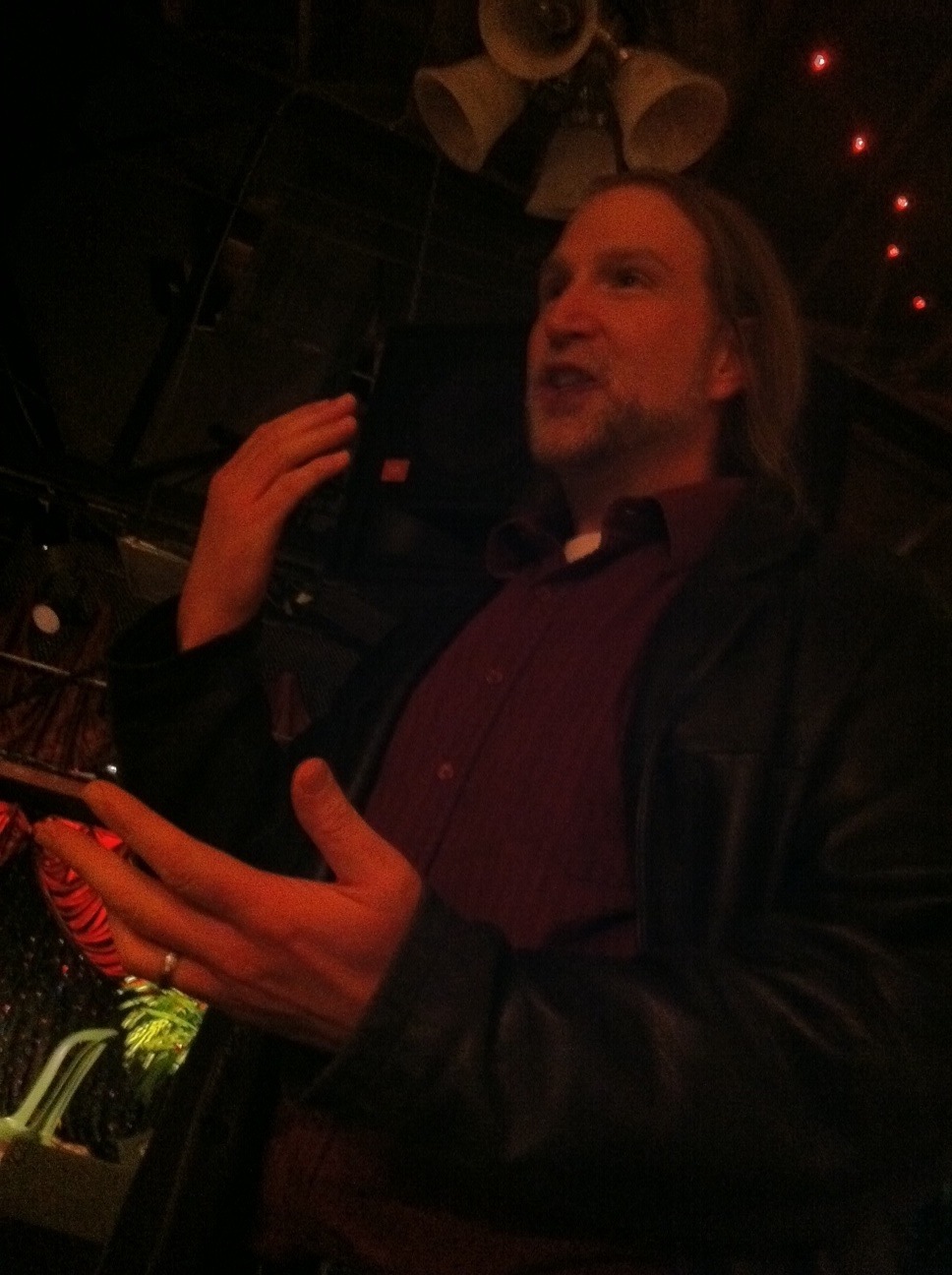
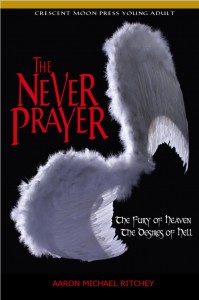
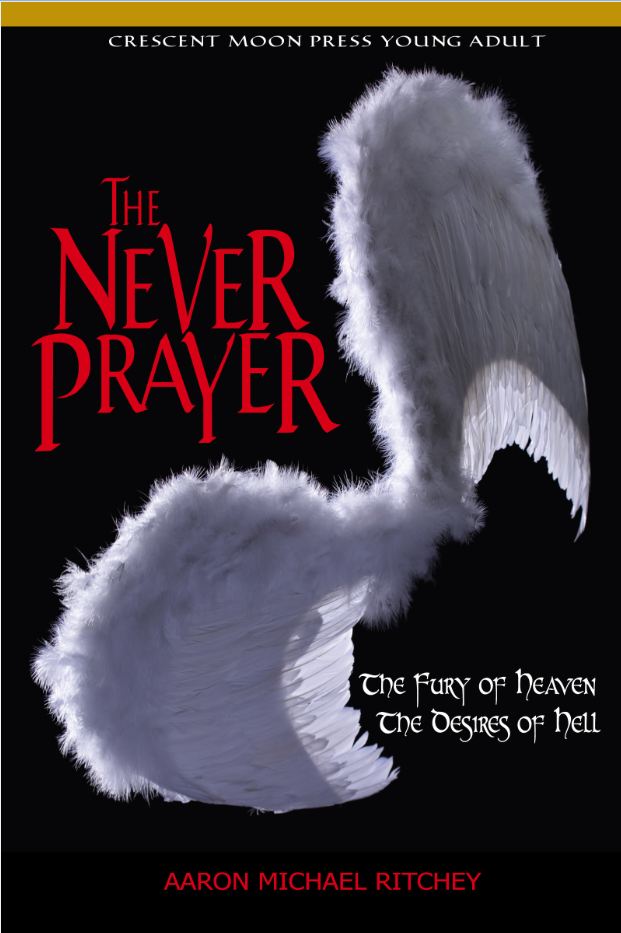
 Guess what? My book is out today. I have an ISBN that I am going to tattoo onto my flesh.
First off, if you are in Colorado, and if you aren’t incarcerated, come and join me for my book launch tonight at Hanson’s Bar and Grill in Denver. The Facebook event is here!
But yes, my dreams of youth have come true in a very real, very worldly, very dirty way.
That’s the world, real, dirty—imperfect. Since March 29, 2012 rates up there with all the important dates in my life, I decided to do the impossible. Any book that gets published is an impossibility, even those self-published. It’s all impossible. So, I am going to interview myself. Yeah, you got it. It’s very Billy Idolish. Let me sink another drink…
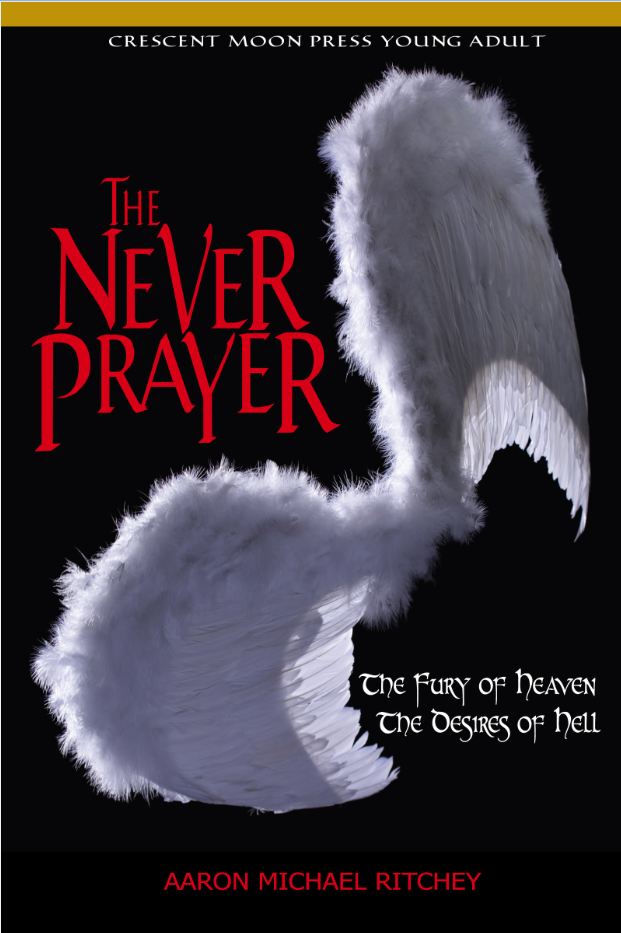
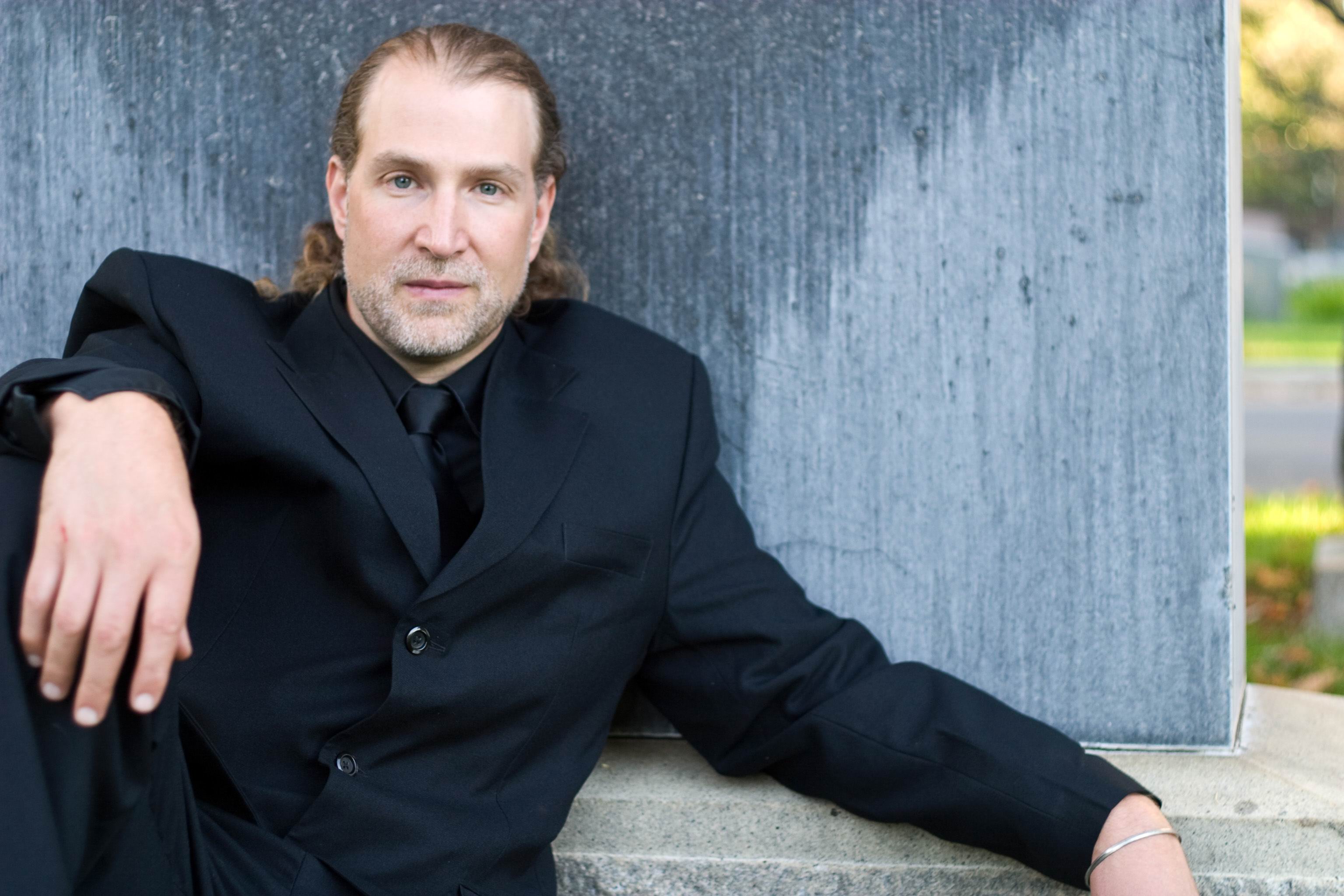
Ah, this Aaron Ritchey, this guy. You want his bio? Click ‘round on this here website. You want a synopsis of The Never Prayer? Same thing. Click around. My short pitch is that my novel is about love, angels, demons, drug addicts, and atheists. And it really is.
So, let’s get to the weirdness? Your Honor, permission to treat the witness as hostile.
Permission granted.
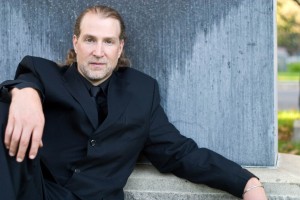 AMR1: So, Aaron, your first book published? Is this the first book you ever wrote?
 AMR2: That’s a bad question. I’ll answer it, but I ain’t happy. Nope. My first book, way back when, I began when I was listening to the song, Mailman by Soundgarden in 1994. I had always wanted to be a writer, from day one. It was my secret dream. And I had stories and characters floating around in me my whole life. That first novel, The Dream of the Archer, it was big, beefy, postmodern, Shakespearean, David Lynchian! It was epic! And wordy. And I tried to pack too much into the book and it bloated up like a novel dunked in the bathtub. It took me years of critique groups, study, book-readin’, for me to write a novel tight enough and good enough to make it through the gauntlet of getting published. Like that old Clint Eastwood movie. Sondra Locke. Ugh.
AMR1: Let’s keep on track. No wandering off. Okay? So what kept you from sending out query letters for the books you wrote?
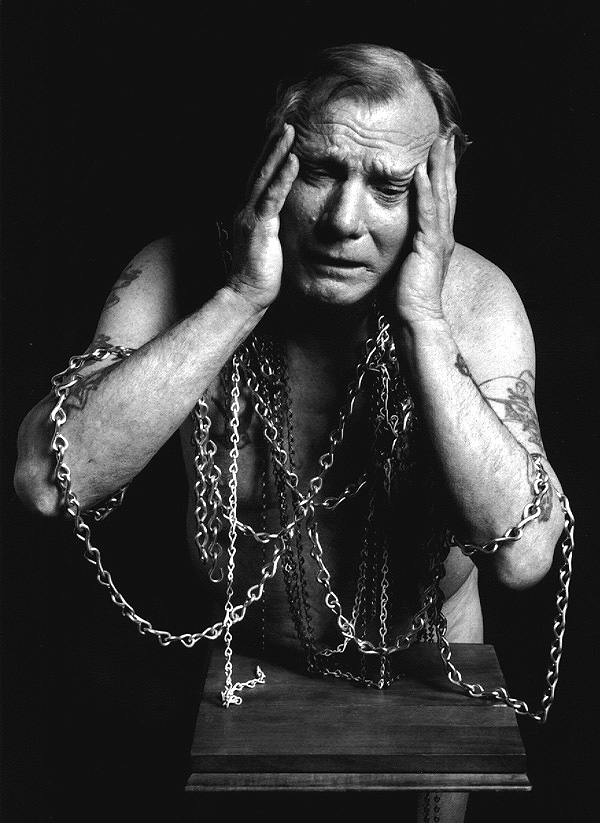
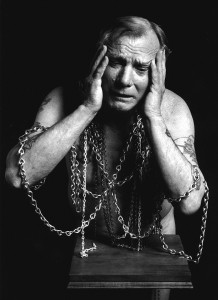 AMR2: Terror, mostly. And I was locked in my basement, in chains, by a madman, for years on end. The madman, being, of course, me. I didn’t know where to start with the pitching and query letters and synopsiseseses. I was lost and forsaken. It was only until I became desperate that I asked for help. And I’ll wander. Damn you.
AMR1: What made The Never Prayer different? Why query this novel and not just shove it away into a drawer like all the others–12, is that right?
AMR2: Well, I wrote a 500,000-word trilogy that I count as one book. But yeah, 12 books, in various stages of revision. One I almost got an agent with, but it was too dark and ironically suicidal. People have a hard time with suicide, and with ironic suicide, my main character came off whiny to a lot of people. I queried 10 agents with The Suicide King, but it never made it. The Never Prayer was a perfect storm. I had gotten a handle on story, and so the narrative is so tight it squeaks. It’s a nice length, about 67,000 words. And it is very me. Angst-ridden, desperate for meaning, searching for the Divine, and the characters are the same way, and it just all worked well. I continued to believe in it even after other people critiqued it. And it’s nice to have a story that people are familiar with, angels and demons, yes, everyone knows about angels and demons, and love, and Twilight, and sparkly vampires. But what I did with the whole angels and demon thing, it’s unique to me. I hope it works.
AMR1: How is your book different from your standard good versus evil book? I mean, it’s all been done. There is nothing new. We are writing in post-postmodernism. The literature of exhaustion, gone to bed, 3 a.m., nothing stirring, no creature awake.
AMR2: Everyone wants to make the Divine clean and perfect and something we can understand. God, Satan, angels and demons, it’s not a crystal castle in the clouds shining down in wonder and perfection. It’s a mud puddle. My angels and demons are mruky creatures, hard to understand, driven, but flawed. If we could logically understand the Divine, it would be a horror. My book is not good against evil. It’s hope against despair. It’s wisdom versus hunger. It’s selflessness versus canoli. It is not a clean fight. It’s mud-puddle dirty.
 AMR1: Who would you want to have coffee with? Your hero, your heroine, or your villain?
AMR2: You ask other authors better questions. How come I don’t get the bar question? Or the wedding planner question? Okay, okay, coffee. I can’t go into a lot of detail because I don’t want to give anything away. At the beginning of the book, it’s not exactly clear who is the villain and who is the hero.
My villain is bad news. When I was writing the book, I would get so upset with him because he is righteously horrible. He’s this wounded soul who hungers and will never be filled, who wants everyone to feel the chaos he has inside of him. Would I want to have coffee with a guy like that? He’d be messing with everyone in the Starbucks and we’d eventually get thrown out. My hero, on the other hand, is just as wounded, but angry, serious, driven by a relentless need to fix the world. In the Starbucks, he’d be counseling the barista on whether she should leave her boyfriend or not. Again, not good company.
Which leaves me with Lena. Who would be drinking venti triple-shot lattes, worried about her brother, grieving over her parents, fighting with her aunt. We could talk music, maybe, but her mind wouldn’t be in the conversation.
Great, I’ve written a novel where I wouldn’t want to have coffee with any of the major characters. The minor characters? I would love to chat with Santiago about his recovery, or Pockets about Battlestar Galactica (best show ever), or Gramma Scar about her five husbands, or Deirdre Dodson about her fashionista ways. The supporting cast is a whole lot happier and easier to get along with. I did that on purpose. I did try and lighten things up with the supporting characters because the book starts off really dark. But things get better as Lena finds her support group.
Johnny Beels would make an awesome wedding planner, however.
AMR1: Are you done? I kinda’ fell asleep. So what emotion do you want readers to leave The Never Prayer feeling?
AMR2: Jeeze, man. What the hell? You were nicer to your other guests. I feel so self-abused. Of course, I wanna leave ‘em all in tears, yo. I cried all the way through this book because Lena has it rough and she wants to get through, but it’s hard on her. But in the end, there is hope, always hope, to change ourselves and to change the world. So yeah, I’d like readers to leave heartbroken but hopeful. Lena makes it through to the other side of her grief. But she pays a price. Gosh, I love this book. I’m so glad this is my first book ever published. I feel so proud to have written it.
AMR1: How fortunate you are. Sad books sell tons. Yeah, uh huh, great. I wish you luck, bro. Okay, this is the big question, and I know you don’t want me to ask you this question, but here it is: if you could take a pill to erase all desire to write without any regrets, would you take it? It’s a one-shot deal, like the red/blue pill in The Matrix. You take it and you are no longer a writer. Would you take it?
 AMR2: Thanks, the one question I didn’t want to answer, you ask me. That’s just great. The acceptable answer is no, not me. I love to write. I was born to write. “In the day we sweat it out on the streets of a runaway American dream…”
The truth? I’d be a better husband, a better father, a better everything if I didn’t have this need to write fiction. I could write other people’s biographies. Everyone is always wanting to me write their memoirs. If I didn’t have this fiction thing, I’d have the time. I could watch more baseball. I could work out more. If I had the pill, I would take it. I’d get countless hours back to do a million other things.
 But there is no pill. If I could have quit writing, I would have. But, though it is a burden, the benefits are legion. I get to be with other writers. I get the joy of finishing a story and looking back and enjoying the moments of feeling the Divine guide my pen. Er, fingers on keyboard. My friend Chris Devlin felt sorry for me because I didn’t like the actual writing. So I decided to love it like nothing else. And magically, it has become wonderful. The actual writing. All the other stuff around it, the marketing, the selling, the publishing woes, that stuff is still hard. Query letters. Hard. But the writing? Good.
Ernest Hemingway said, “Once writing has become your major vice and greatest pleasure only death can stop it.” That has happened to me. I’m in this for the duration.
I will always write books. I will never stop. Ever. It’s too late for me. If you can quit writing, quit now. If you can’t, God help you. God help us all. But enjoy the ride. Henry Miller said it. The only reward for writing is writing.
So let the words flow. Peace out!

 My book is one day old today. I have a newborn. And yes, the work, oh Lord, the work, but I get to sleep in one long
 six-hour chunk. My human newborn babies never let me sleep that long.
 First off, since I love angels who are atheists, I have to thank my publicist, Bree Ervin. She had faith in the book, and she had faith in me, and all along, I thought she was my Plan B for publicity. Nope, she is Plan A. Ain’t got no other plan but her.
 me die to my old self. They took away all my time so I had to prioritize. I couldn’t lay around watching bad movies (Curly Sue) any more. Fatherhood carved away all of the distractions and focused me, tempered me like steel. Angels are messengers from God and my daughters brought the message of who I really am.